
Practical training plays a vital role in pharmacy education, helping students bridge the gap between theoretical knowledge and real-world application. In the field of pharmacy, where accuracy and practical skills are essential, hands-on experience becomes a key factor in building a successful career.
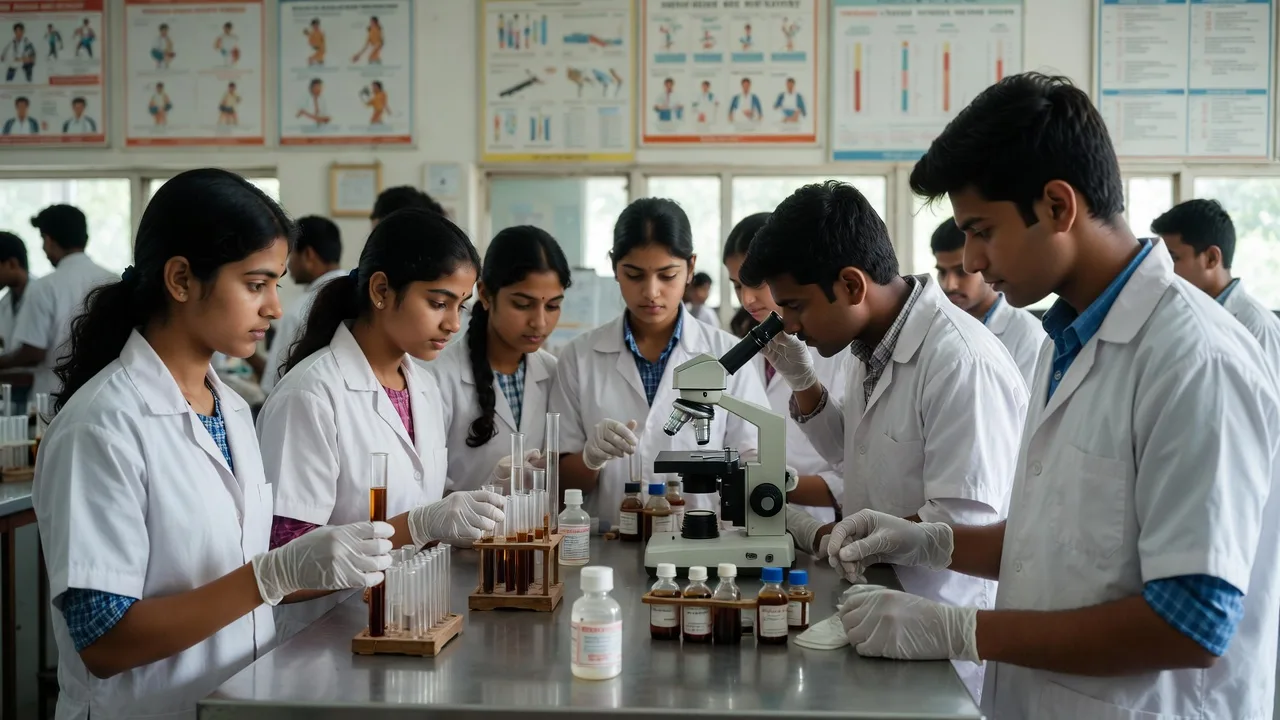
One of the biggest advantages of practical training is that it helps students understand how medicines are prepared, handled, and dispensed. Through laboratory sessions and real-life demonstrations, students gain a clear understanding of drug composition, dosage, and safety measures. This not only improves their knowledge but also builds confidence in handling responsibilities.
Practical training also enhances technical skills and problem-solving abilities. Students learn how to use laboratory equipment, perform experiments, and follow proper procedures. These skills are highly important for working in pharmaceutical companies, hospitals, and research labs.
Another important benefit is that it prepares students for real-world challenges. By working in a simulated or real healthcare environment, students become familiar with industry standards and professional practices. This makes them job-ready and increases their chances of getting better career opportunities.
Moreover, practical exposure helps in improving communication and teamwork skills. Students often work in groups during lab sessions, which helps them learn coordination, responsibility, and professional behavior.
In today’s competitive healthcare sector, employers look for candidates who have both knowledge and practical experience. Therefore, practical training gives students a strong advantage in their career and helps them stand out in the job market.
In conclusion, practical training is an essential part of pharmacy education that not only strengthens knowledge but also prepares students for a successful and confident professional journey.
